

Private 5G Networks: Where Things Stand in 2026
Private 5G has moved on from being a topical idea. It is now an established part of enterprise and industrial connectivity. The market has grown steadily out of the success of Private LTE, particularly in the U.S.A., where both LTE and 5G private networks run in the 3.5GHz CBRS (Citizens Broadband Radio Service) shared band. By the end of Q2 2026, GSA had identified 2,031 organisations in 88 countries deploying private mobile networks with a contract value above $113,000, and 5G accounts for more than half of the deployments announced since 2022. Private LTE hasn't gone away, but the balance is clearly shifting.
Advantages
5G is a compelling private networking technology. Its design targets include multi-Gbps data rates, latency down to around 1ms for low-latency services, and reliability of beyond 99.999%. In practice, what a network actually achieves depends on spectrum, configuration and deployment. The technology also offers advantages beyond raw performance. Connection density is roughly ten times that of LTE, which makes 5G a strong fit for private deployments with large numbers of end devices, such as in enterprise, industry and healthcare. 5G RedCap (Reduced Capability) devices now fill the gap between low-power IoT and full-featured 5G, making affordable wearables, sensors and industrial cameras practical.
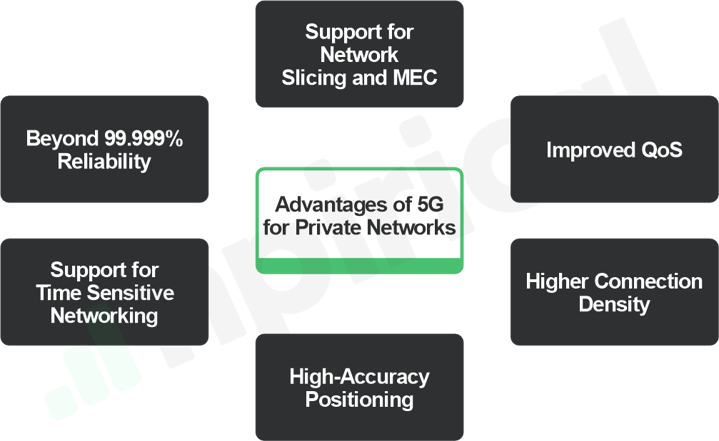
Figure 1 – Advantages of 5G for Private Networks
Challenges
Deploying 5G in a private setting still has its challenges. Cost has come down as the ecosystem has matured. GSA reports 392 mobile network operators have now launched a 5G network, and a growing range of vendors offer compact, enterprise-focused private 5G systems. Even so, total cost of ownership, integration with existing OT (Operational Technology) and IT (Information Technology) systems, and the availability of in-house skills remain real hurdles, especially for smaller organizations.
Spectrum is a significant consideration, and GSA notes that deployments are concentrated in high- and upper/middle-income markets, led by the United States, Germany and the United Kingdom. This isn't a coincidence: a strong correlation persists between private network adoption and the availability of dedicated or shared spectrum. At present, there are three options available: Licensed, Unlicensed and Shared.

Licensed
Although operating the Private 5G network within a licensed spectrum band will mitigate the risk of interference, the cost associated with this option is potentially too great. This, however, is scenario-dependent; for an enterprise deployment of Private 5G, it’s unrealistic to think that that enterprise would be in a position to purchase exclusive access to radio spectrum. However, for a national infrastructure company it may be an option. Interestingly, spectrum regulators tend to understand these issues, and consequently, some common-sense approaches to licensed spectrum usage are beginning to emerge. For example, the UK regulator Ofcom is permitting access to licensed spectrum owned by mobile service providers which may be either a) unused or b) not deployed in a specific geographical area. For a small fee and under strict regulation (transmission range, geography, etc.), a Private 5G network could potentially access this spectrum. The mining industry, in particular, could benefit from this approach since mines deep underground or geographically isolated are unlikely to interfere with public mobile networks.
Unlicensed
With this approach, the Private 5G network operates in unlicensed spectrum shared with other technologies such as Wi-Fi, using 5G NR-U (NR in Unlicensed spectrum). Interference is an issue, but the spectrum is free. The 6GHz band is the one to watch: the USA has opened the full 1.2GHz for unlicensed use, while Europe has used the lower part of the band for Wi-Fi since 2021 and is still working out how the upper part will be shared between Wi-Fi and mobile.
Shared
Around the globe today, spectrum regulators are assigning spectrum bands allocated to shared spectrum operation and reserved for a particular technology such as LTE or 5G. For a typically low fee, a Private 5G network can be deployed with a reduced risk of interference and access to wide channels. For example, in the UK, Ofcom's Shared Access framework covers 1.8 GHz, 2.3 GHz, 3.8-4.2 GHz, and 26 GHz, with Low Power and Medium Power licenses available. The 3.8-4.2GHz band is the main focus here, with 390 MHz of spectrum available, although it is shared with a variety of other users across the UK. Ofcom has also made access easier over time: a new coordination approach assumes Shared Access networks are synchronized, significantly reducing the separation distances needed between users.
Deployment Models
From the perspective of 3GPP (the standards body responsible for 5G), Private 5G networks are termed NPNs (Non Public Networks) first specified in Release 16. There are two high-level deployment models:
- SNPN (Standalone NPN) – this is a Private 5G network which is self-contained; the network owner is responsible for the RAN and Core elements, with no interaction with a Mobile Service Provider.
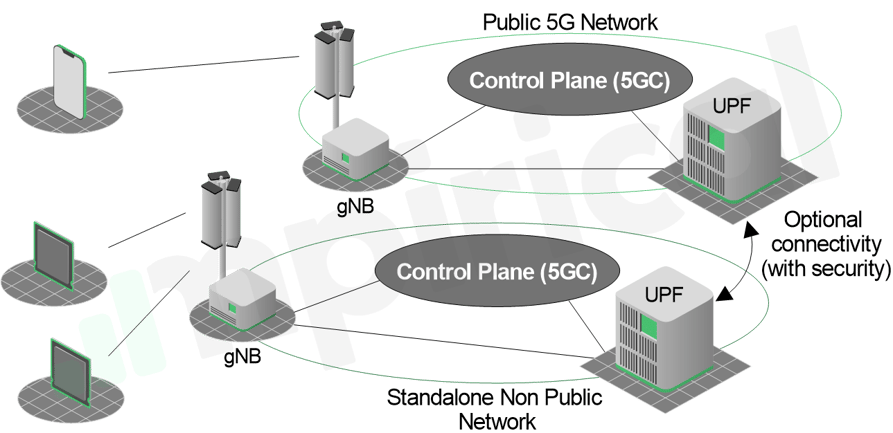
Figure 3 – Standalone Non Public Network
-
Public Network Integrated NPN – with this approach, a Mobile Service Provider will assist in the deployment of the Private 5G network. This could include RAN sharing, RAN and Core Sharing or full outsourcing, possibly instantiated as a network slice within the Public 5G network.
.png?width=815&height=420&name=Figure%204%20-%20Public%20Network%20Integrated%20Non%20Public%20Network%20(RAN%20Sharing%20Example).png)
Figure 4 – Public Network Integrated Non Public Network (RAN Sharing Example)
Conclusion
Private 5G is an established technology with real deployments across the world. Manufacturing leads by number of deployments, followed by education and academic research, and mining. Challenges do exist: cost and integration effort, spectrum rules that vary from country to country, and a shortage of 5G expertise within the private networking industry. However, use cases such as Industry 4.0 and AI at the edge make a strong business case, because 5G offers deterministic, high-performance communication that other private networking technologies struggle to match. With standards bodies, spectrum regulators and equipment manufacturers working together, Private 5G extends the reach of 5G well beyond the traditional mobile space.
For more information on Private 5G, take a look at our Private 5G System Engineering course.